Small Business Marketing in 2026: What Actually Matters
Small Business Marketing in 2026: What Actually Matters
If you're a small business owner in 2026, marketing probably feels more confusing than ever.
Every week there's a new platform, a new AI tool, a new algorithm update, or a new expert telling you that if you're not doing the latest thing, you're already behind.
The reality is much simpler.
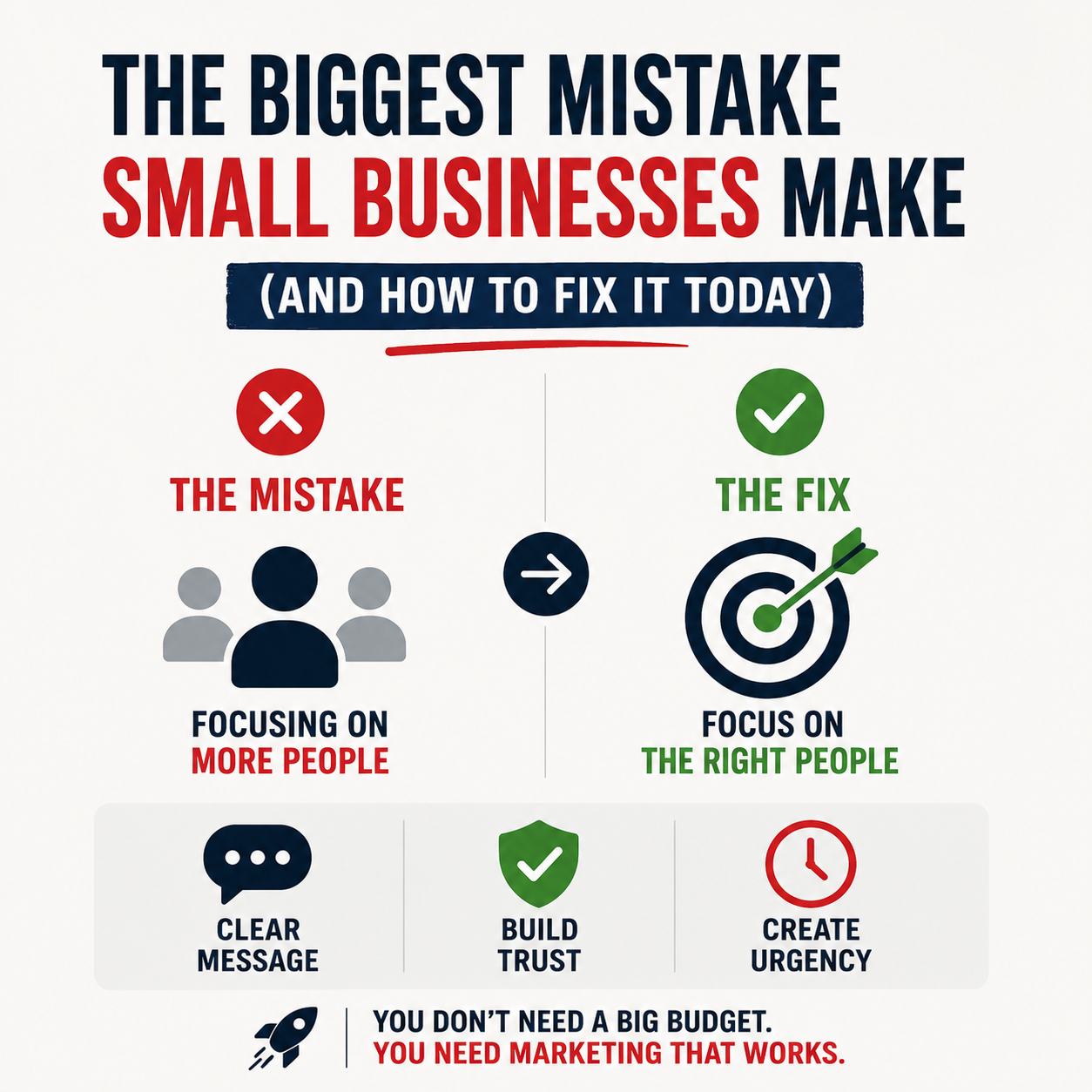
Most successful small businesses are not winning because they're doing everything. They're winning because they're doing the right things consistently.
So what actually matters in small business marketing in 2026?
1. Being Easy to Find
It sounds obvious, but many businesses still make it difficult for customers to find them.
When someone searches for your service, can they quickly find:
- Your website?
- Your phone number?
- Your location?
- Your reviews?
- The answers to their questions?
Customers expect instant information. If they can't find what they need within a few seconds, they'll often move on to a competitor.
This is why local SEO, an optimized Google Business Profile, and a fast, easy-to-use website remain some of the highest return marketing investments available to small businesses. Local search continues to be one of the biggest drivers of purchase intent for service businesses and local retailers.
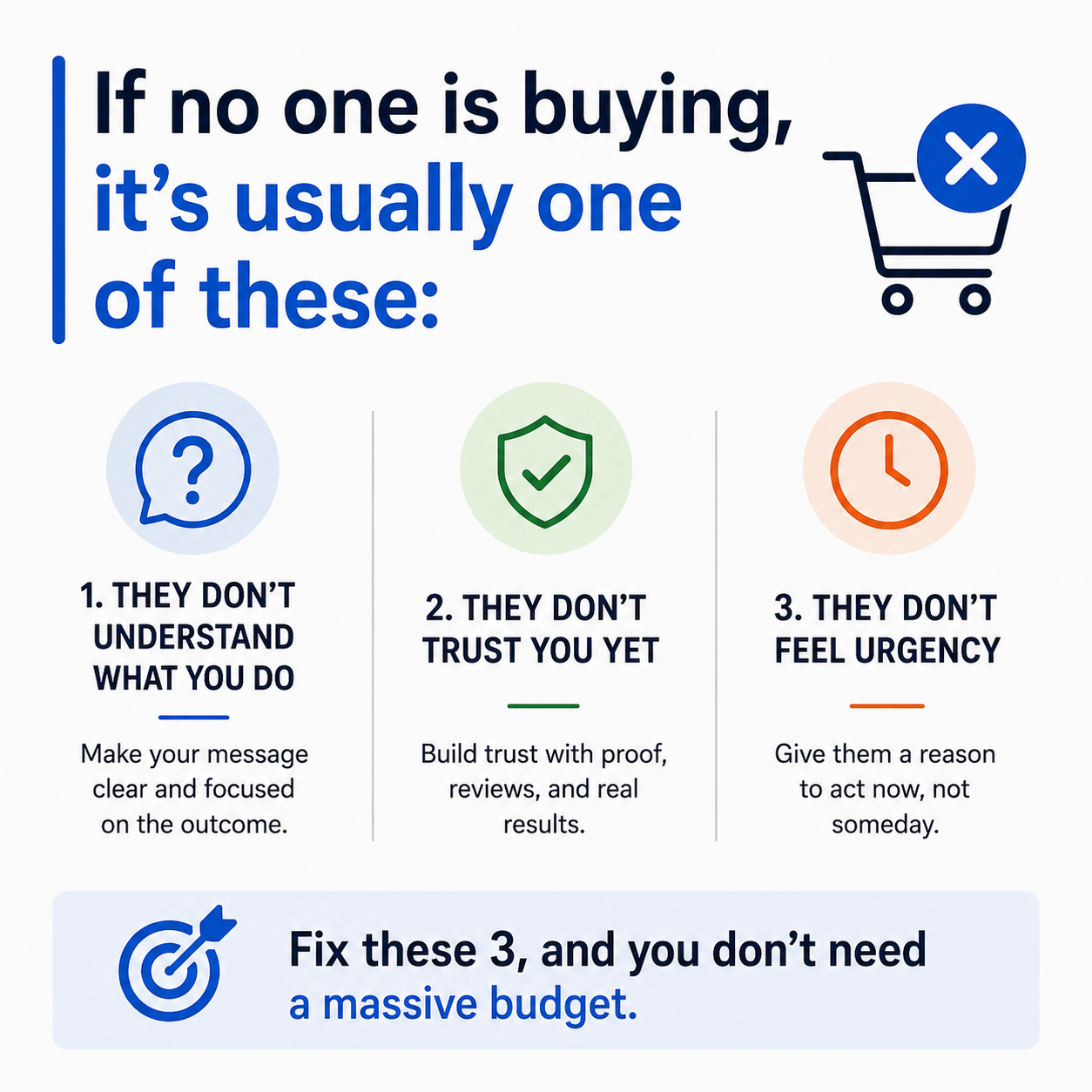
2. Trust Is the New Currency
Ten years ago, businesses competed for attention.
Today, they compete for trust.
Consumers are exposed to thousands of marketing messages every day. They're more skeptical, more informed, and have more choices than ever before.
Before contacting a business, most people will:
- Read reviews
- Visit your website
- Check your social media
- Compare competitors
- Search for your reputation online
Marketing is no longer about convincing people you're good.
It's about proving it.
Customer reviews, testimonials, case studies, and visible expertise have become some of the most powerful marketing assets a business can have.
3. Helpful Content Beats Sales Pitches
Businesses often ask what they should post on social media or write about on their blog.
The answer is simple:
Answer customer questions.
Every question your customers ask your sales team, reception desk, or customer service team is a piece of content waiting to happen.
Questions like:
- How much does it cost?
- How long does it take?
- What's included?
- How does your service compare to alternatives?
- What mistakes should customers avoid?
Businesses that consistently educate their customers build authority and trust long before the first sales conversation happens.
4. AI Is a Tool, Not a Strategy
Artificial intelligence has become one of the biggest conversations in marketing.
The businesses getting the best results with AI are using it to save time, improve efficiency, and speed up content production.
They're not using it to replace strategy or human expertise.
AI can help businesses:
- Generate ideas
- Draft content
- Analyze data
- Improve customer service
- Repurpose existing content
But customers still buy from people and businesses they trust.
Human experience, expertise, and relationships remain difficult to automate. Many brands are finding that AI works best when it enhances human creativity rather than replacing it.
5. Search Has Changed
People are no longer just searching Google.
They're asking questions in ChatGPT, AI assistants, and Google's AI-generated search results.
Instead of typing:
"best accountant Toronto"
People increasingly ask:
"Who are the best accountants for small businesses in Toronto?"
This change means businesses need to focus less on keywords and more on providing clear, useful answers.
Businesses that publish expert content, answer common questions, and demonstrate real experience are becoming more visible in both traditional search and AI-generated results.
6. You Don't Need to Be Everywhere
One of the biggest mistakes small businesses make is trying to be active on every platform.
Facebook.
Instagram.
LinkedIn.
TikTok.
YouTube.
X.
The result is usually mediocre content spread across multiple channels.
Most businesses are better off choosing one or two platforms where their customers already spend time and doing those exceptionally well.
Consistency almost always beats volume.
7. Email Marketing Is Still One of the Best Investments You Can Make
Email has survived every marketing trend for one reason:
It works.
Unlike social media, you own your email list.
Algorithms don't decide whether your customers see your message.
For many small businesses, email remains one of the highest ROI marketing channels available, especially for repeat business, referrals, and customer retention.
8. Marketing Is Becoming More Human, Not Less
Ironically, as technology becomes more advanced, businesses are rediscovering the importance of human connection.
Customers want to know:
- Who you are.
- What you stand for.
- Why you do what you do.
- How you help people.
Authenticity is becoming a competitive advantage.
The businesses that communicate like real people rather than corporate brochures are often the ones that stand out.
The Bottom Line
Small business marketing in 2026 is not about chasing every trend.
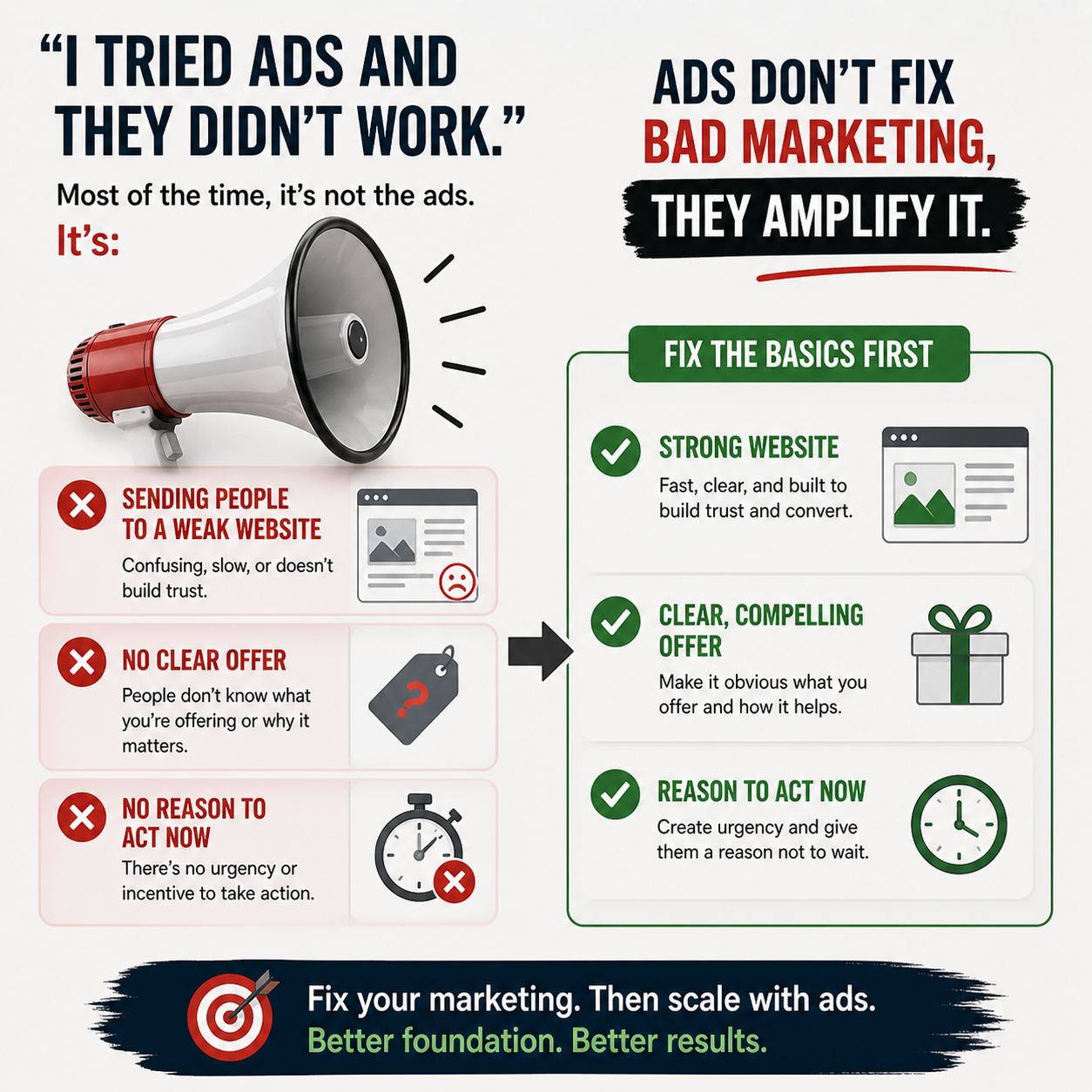
It's about mastering the fundamentals.
Be easy to find.
Be easy to trust.
Answer customer questions.
Show your expertise.
Build relationships.
Use technology to become more efficient, not less human.
The businesses that focus on those fundamentals will continue to grow, regardless of what the next algorithm update decides to do.