I Tried Ads and They Didn't Work" - Here's What Actually Went Wrong
If your paid ads flopped, the problem probably wasn't the ads. Most businesses unknowingly sabotage their campaigns before they even go live.
It's one of the most common refrains in small business marketing: "We ran Facebook ads, burned through our budget, and got nothing." So the ads get blamed, the platform gets called a scam, and the campaign gets shelved.
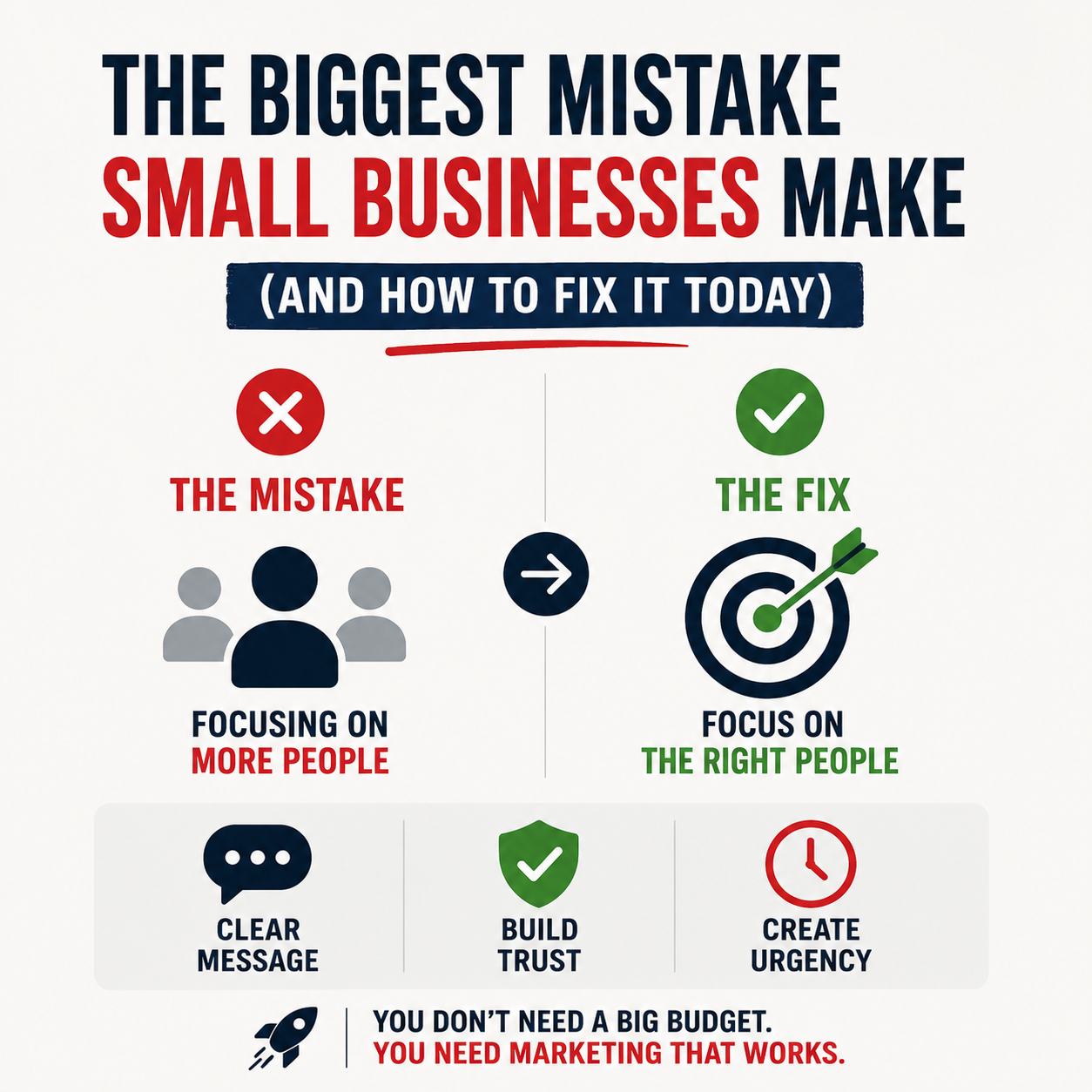
But here's the uncomfortable truth: ads rarely fail because of the ads. They fail because of everything surrounding them - the website they send people to, the offer being made, and whether there's any reason to act right now.
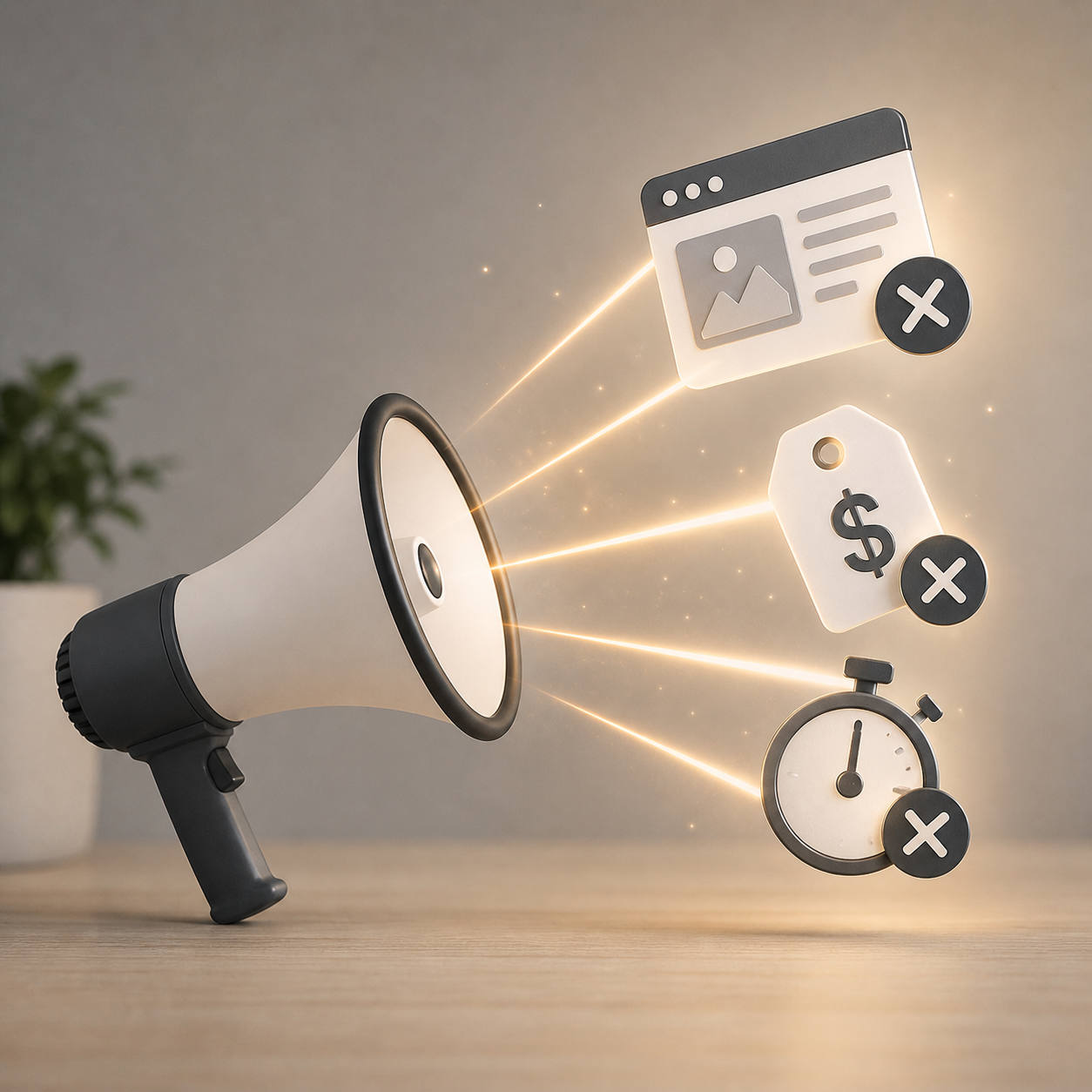
Paid advertising is an amplifier. It takes your existing marketing and turns up the volume. Which means if your marketing foundations are weak, ads will make that weakness louder - not fix it.
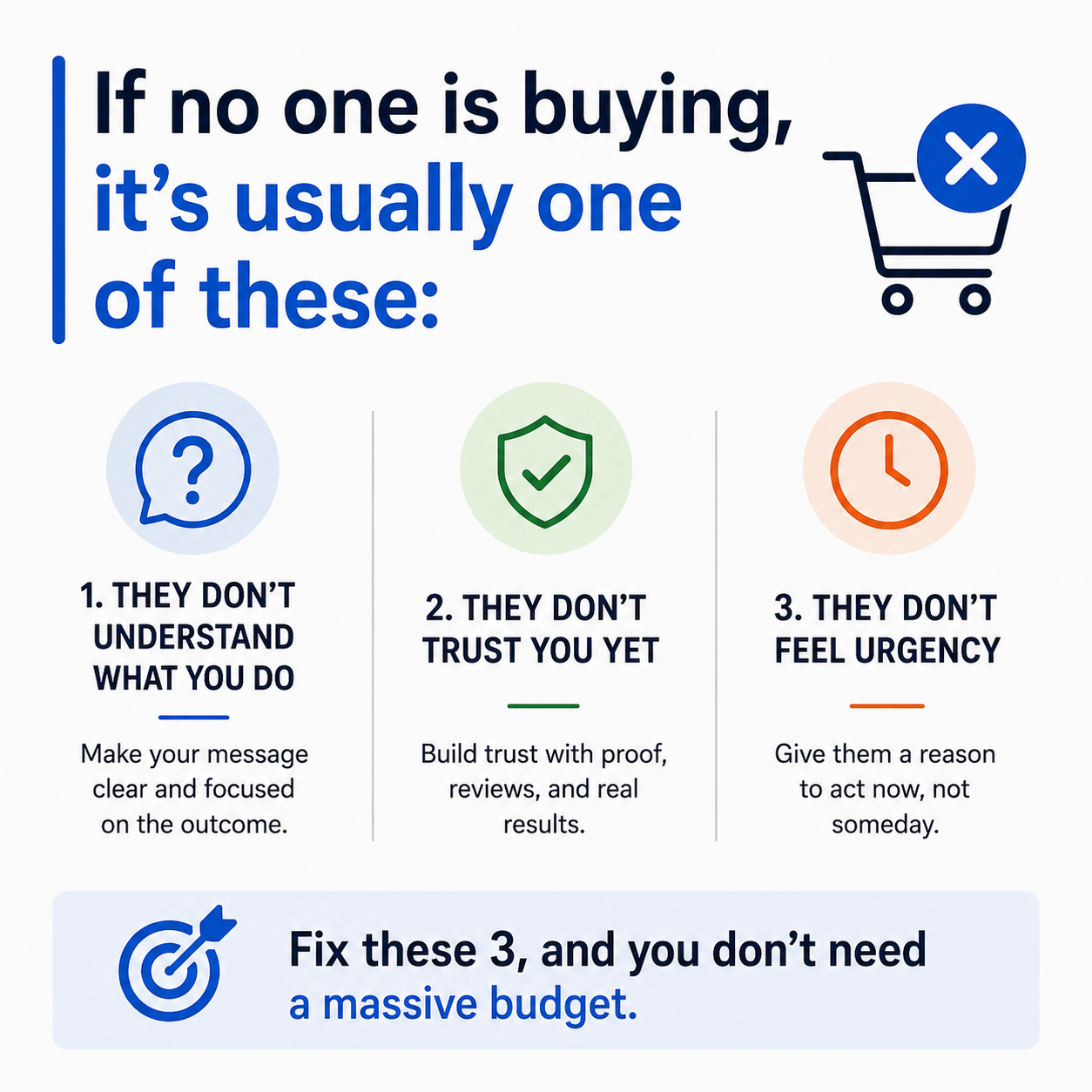
The three real reasons your ads underperform
Reason 01 - Your website isn't converting. Ads bring people to the door. A weak website sends them straight back out. If visitors aren't converting organically, paid traffic won't change that.
Reason 02 - No clear offer. Vague messaging like "quality service" or "we're here to help" doesn't move people. Prospects need to immediately see what they get, and why it matters to them.
Reason 03 — Nothing to act on now. Without urgency - a deadline, a limited offer, a reason to decide today , people bookmark your page and forget it. Good intentions don't convert.
Your website is doing more damage than you think
When someone clicks your ad, you have about three seconds to answer the most important question in their head: "Am I in the right place?" A slow-loading page, a cluttered homepage, or a headline that doesn't match the ad they just clicked will kill conversions instantly - no matter how good the ad was.
A useful benchmark: if a stranger can't tell what you do, who it's for, and what to do next within five seconds of landing on your site, the site needs work before the ads do.
Check your page against these before spending another dollar on traffic:
✓ The headline immediately states what you do and who it's for.
✓ There's one clear call to action = not five competing ones
✓ The page loads in under three seconds on mobile
✓ Social proof (reviews, results, logos) is visible above the fold
✓ The ad and the landing page say the same thing
An offer isn't a service - it's a transformation
Most small businesses advertise their services. The businesses that win with ads advertise outcomes. There's a significant difference between "we offer bookkeeping services" and "get your books clean, tax-ready, and off your plate - in 10 business days."
The more specifically you can describe the result your customer gets -the before and after state - the more your offer will resonate. Specificity builds trust. Generic claims don't.
"Ads don't fix bad marketing. They amplify it."
Why urgency isn't manipulation - it's clarity
People are busy and distracted. Even genuinely interested prospects will delay a decision indefinitely if there's no reason to act now. Urgency closes that gap - not by pressuring people, but by giving them a reason to prioritize you today over the hundred other things on their list.
This doesn't require fake countdown timers or artificial scarcity. It can be a seasonal offer, a limited intake of clients, a bonus for booking before a certain date, or simply a framing that makes the cost of waiting feel real.
So when should you actually run ads?
Ads make sense when your website converts visitors into leads at a reasonable rate, you have a clear offer with a specific result, and you have some mechanism - even a light one, that encourages people to act soon rather than later.
If those three things are in place, ads can dramatically accelerate growth. If they're not, fix them first. You'll get better results from that work alone than from any ad campaign running on a broken foundation.
The right order: fix the foundation → define the offer → add urgency → then amplify with ads. Not the other way around.